Understanding Logistic Regression
Logistic Regression is a fundamental algorithm in machine learning used for binary classification problems. Despite its name containing "regression," it's primarily employed for predicting the probability of a discrete outcome, typically binary (yes/no, true/false, 0/1).
How it Works
Unlike linear regression, which predicts a continuous value, logistic regression uses a sigmoid (or logistic) function to output a probability value between 0 and 1. This probability can then be thresholded to make a class prediction.
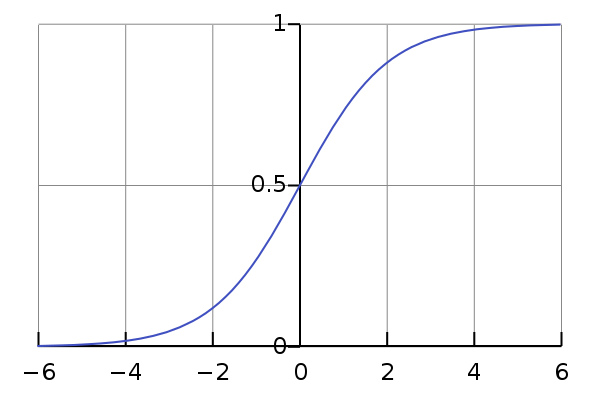
The Sigmoid (Logistic) Function: σ(z) = 1 / (1 + e^-z)
The output of the sigmoid function represents the probability that an instance belongs to the positive class (e.g., class 1). A common threshold is 0.5. If the predicted probability is greater than 0.5, the instance is classified as belonging to the positive class; otherwise, it's classified as belonging to the negative class.
The Logistic Regression Equation
The model predicts the probability of the positive class (y=1) given the input features (X) as:
P(y=1 | X) = σ(β₀ + β₁x₁ + β₂x₂ + ... + βnxn)
Where:
σis the sigmoid function.β₀is the intercept (bias).β₁, β₂, ..., βnare the coefficients for each featurex₁, x₂, ..., xn.
Implementation with Python (Scikit-learn)
Scikit-learn provides a straightforward way to implement logistic regression.
Example Code:
from sklearn.linear_model import LogisticRegression
from sklearn.model_selection import train_test_split
from sklearn.datasets import make_classification
from sklearn.metrics import accuracy_score, classification_report

# Generate some synthetic data for binary classification
X, y = make_classification(n_samples=200, n_features=10, n_informative=5, n_redundant=0, random_state=42)

# Split the data into training and testing sets
X_train, X_test, y_train, y_test = train_test_split(X, y, test_size=0.3, random_state=42)

# Initialize and train the Logistic Regression model
model = LogisticRegression()
model.fit(X_train, y_train)

# Make predictions on the test set
y_pred = model.predict(X_test)
y_pred_proba = model.predict_proba(X_test)[:, 1] # Probability of the positive class

# Evaluate the model
accuracy = accuracy_score(y_test, y_pred)
report = classification_report(y_test, y_pred)

print(f"Model Accuracy: {accuracy:.4f}")
print("Classification Report:")
print(report)

# Display coefficients (for understanding feature importance)
print("\nModel Coefficients:")
for i, coef in enumerate(model.coef_[0]):
    print(f"  Feature {i}: {coef:.4f}")
print(f"  Intercept: {model.intercept_[0]:.4f}")
Key Concepts and Considerations
- Binary Classification: Primarily used for two-class problems. Can be extended to multi-class problems using strategies like One-vs-Rest or One-vs-One.
- Probability Output: Outputs probabilities, allowing for flexible decision-making beyond a simple hard classification.
- Feature Scaling: Logistic regression can be sensitive to the scale of features. It's often beneficial to scale features (e.g., using StandardScaler) before training.
- Regularization: To prevent overfitting, regularization techniques (L1 or L2) are commonly used. Scikit-learn's
LogisticRegressionincludes parameters likeC(inverse of regularization strength) andpenalty. - Assumptions: Assumes a linear relationship between the features and the log-odds of the outcome.
Advantages
- Simple to implement and interpret.
- Computationally efficient, especially for large datasets.
- Outputs probabilities, which can be very useful.
- Less prone to overfitting than some more complex models.
Disadvantages
- Assumes linearity between features and log-odds.
- May not perform well on complex datasets with non-linear relationships.
- Sensitive to outliers.